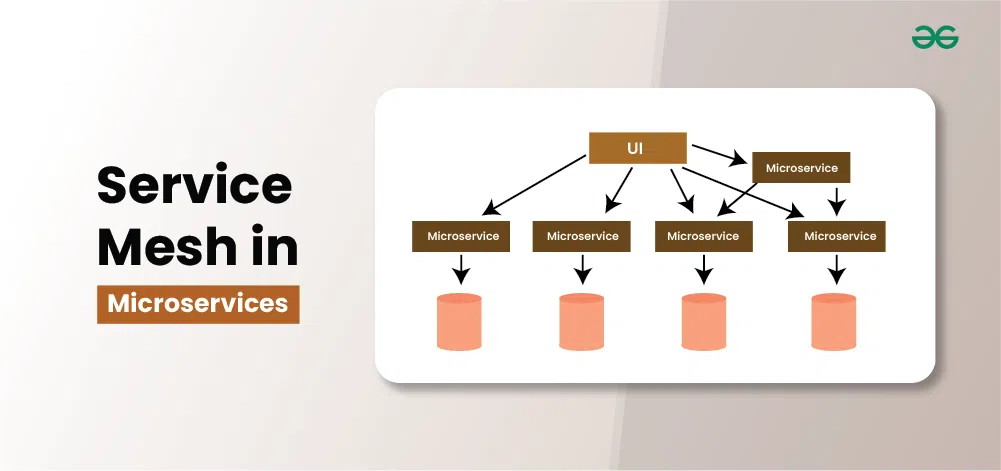
In the digital world of microservices, applications no longer resemble neat towers of code but sprawling cities with countless streets, alleys, and intersections. Each microservice is like a building with its own purpose—some power the grid, others manage traffic, while a few handle security. Yet, just as a city cannot thrive without clear roads and signals, microservices cannot function without reliable communication. This is where a service mesh enters the story—acting like an invisible but indispensable road authority that orchestrates smooth, safe, and efficient traffic across the entire cityscape.
The Invisible Traffic Controller of Microservices
Imagine a metropolis without traffic lights. Cars would honk, collide, and stall at every junction. Similarly, microservices without a service mesh often become entangled in complex networking rules, retries, and security overheads. Developers, instead of focusing on building features, spend time patching the potholes of communication. A service mesh, through proxies like Envoy, slips between the cracks and becomes the silent traffic controller. It ensures every service knows where to go, how to get there, and what rules to follow.
This invisible guidance has made service meshes popular in modern engineering teams. Whether it’s a banking app ensuring secure transactions or an e-commerce site managing thousands of daily orders, the service mesh reduces chaos and replaces it with orchestration. For learners exploring advanced tools in a DevOps Course in Chennai, this analogy helps illustrate how Istio and Linkerd make traffic management second nature in distributed environments.
Istio: The Skilled Urban Planner
If the service mesh is the road authority, Istio is the visionary urban planner who ensures the city doesn’t collapse under its own weight. Istio introduces a control plane that defines policies and manages communication across services. Think of it as the central office that sets speed limits, issues permits, and reroutes traffic during construction.
With Istio, developers gain fine-grained control over service-to-service communication. It enables intelligent routing, canary deployments, and end-to-end encryption. But its greatest gift is consistency: whether you’re rolling out a new feature or scaling to millions of users, Istio ensures every vehicle follows the same traffic law. Its complexity can be intimidating, much like a bustling metro system, but once mastered, it becomes the lifeline of resilient infrastructure.
Linkerd: The Minimalist Architect
On the other side stands Linkerd, a service mesh that embraces simplicity. If Istio is a metropolitan planner designing underground subways and expressways, Linkerd is the minimalist architect who builds clean, functional streets with fewer moving parts. It focuses on lightweight proxies, faster performance, and an easy-to-understand control plane.
Teams that adopt Linkerd often do so for its clarity. It strips away unnecessary complexity while still offering the essentials—observability, reliability, and security. This approach resonates with engineers who value speed of implementation and reduced overhead. For practitioners attending a DevOps Course in Chennai, Linkerd often serves as an accessible gateway to understanding the service mesh concept before advancing to Istio’s feature-rich ecosystem.
Observability: Seeing the City from Above
One of the hidden superpowers of a service mesh is observability. Picture a drone hovering above the city, capturing live feeds of every car, road, and bottleneck. With Istio and Linkerd, teams gain access to dashboards and metrics that display service-to-service latency, error rates, and traffic patterns. Instead of reacting blindly to complaints, engineers can diagnose problems before they snowball.
For businesses, this observability translates into uptime guarantees and happy customers. For developers, it means fewer late-night firefighting sessions. Service meshes don’t just make communication possible; they make it visible, measurable, and improvable.
Security: Guardrails for Every Highway
Security in a microservice architecture is not just about keeping intruders out—it’s about ensuring every vehicle on the road has a license, follows the law, and travels through secure checkpoints. Istio and Linkerd handle mutual TLS (mTLS) like guardrails on highways, ensuring encrypted communication and verified identities.
This built-in security eliminates the need for developers to hard-code certificates and protocols into their applications. The result is a safer ecosystem, where services can trust each other without exposing vulnerabilities. In today’s threat-heavy digital landscape, these features are not luxuries but necessities.
Conclusion: The Road Ahead for Service Meshes
The beauty of a service mesh lies in its invisibility. Like traffic controllers who rarely make headlines yet keep cities alive, Istio and Linkerd thrive in the background, silently ensuring that microservices hum along without clashes or confusion. Whether you choose Istio’s all-encompassing blueprint or Linkerd’s streamlined simplicity, both tools help teams manage scale, security, and stability with grace.
As organisations increasingly rely on microservices to deliver complex digital experiences, the service mesh becomes a crucial ally. It transforms the sprawling, chaotic city of code into a well-managed, efficient, and secure environment. For learners and professionals alike, diving deeper into Istio and Linkerd is like studying the hidden architecture that keeps the world’s busiest digital highways safe and smooth.